
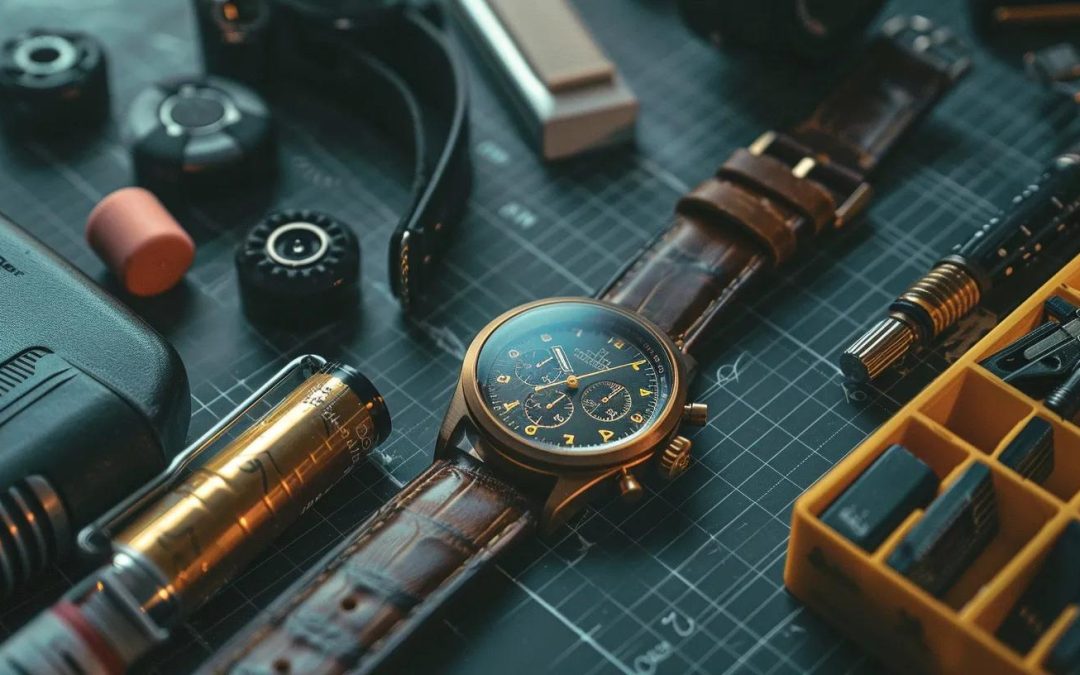
A watch movement is the engine that drives every tick, tock, and complication in a timepiece, and understanding its types, parts, and selection criteria can transform both repair and design projects. In this guide, you’ll discover how mechanical, quartz, and hybrid movements function, why components like mainsprings and escapements matter, and how to choose and maintain the right caliber for your needs—all while exploring resources and supplies from C.R. Time Company. We begin by explaining the three principal movement families, then unpack their core components, decision-making factors, identification and upkeep methods, sourcing options from C.R. Time’s one-stop supplier catalog, historical evolution, and finally, address common questions watchmakers and enthusiasts encounter. By following this structured overview of the watch movement guide, you’ll gain actionable insights to improve accuracy, durability, and performance in every project.
What Are the Main Types of Watch Movements?
A watch movement refers to the mechanism that powers a timepiece, defines its accuracy, and determines maintenance needs. Mechanical movements use a coiled mainspring and gear train to deliver energy, offering craftsmanship appeal and self-sustaining power in automatic versions. Quartz movements rely on a battery and vibrating crystal to achieve high precision with minimal upkeep. Hybrid movements—such as kinetic and solar quartz—combine mechanical winding or light-driven charging with quartz regulation for extended autonomy.
Below is a comparison of the three primary movement types, highlighting their defining features and advantages.
| Type of Movement | Power Source | Key Benefit |
|---|---|---|
| Mechanical | Mainspring and gears | Craftsmanship and smooth sweep |
| Quartz | Battery and crystal | Superior accuracy and low maintenance |
| Hybrid | Kinetic rotor or solar cell | Self-charging with quartz precision |
Each movement family fulfills different functional goals and user preferences, setting the stage for deeper exploration of how each mechanism works.
How Does a Mechanical Watch Movement Work?
A mechanical watch movement stores energy in a mainspring, then transmits that power through a gear train to an escapement and balance wheel, which regulate timekeeping and deliver smooth hand motion. The mainspring tightens when wound, driving gears that transfer energy at controlled intervals. The escapement “ticks” by releasing regulated impulses to the balance wheel, whose oscillations maintain a steady frequency. This intricate interplay yields a seamless sweep of the second hand and appeals to connoisseurs valuing heritage and tactile winding rituals.
Precision tuning of the gear train and escapement geometry directly influences rate stability, making high-jewel counts and fine adjustment mechanisms essential for professional results and long-term reliability.
What Is the Difference Between Manual and Automatic Movements?
Manual movements require periodic winding via the crown to tension the mainspring, offering a direct mechanical connection and simplified construction. Automatic movements incorporate a weighted rotor that oscillates with wrist motion, converting kinetic energy into spring tension and reducing the need for manual winding.
Manual winding ensures direct user engagement with every full power cycle, while automatic calibers enhance convenience and continuous operation. Both types share core components—mainspring, gear train, escapement—but differ in the energy-capture mechanism that replenishes the spring.
How Do Quartz Watch Movements Operate?

A quartz watch movement is powered by a small battery that sends an electrical current through a quartz crystal, causing it to vibrate at a precise frequency (typically 32,768 Hz). An integrated circuit counts these oscillations and drives a stepper motor to advance the hands in consistent one-second increments.
Quartz calibers deliver exceptional accuracy (often within ±15 seconds per month) and minimal maintenance, requiring only periodic battery replacement and occasional lubrication of mechanical parts.
What Are Hybrid Watch Movements and Their Benefits?
Hybrid movements blend mechanical and quartz technologies to maximize autonomy and precision. Kinetic movements use wrist motion to charge a rechargeable cell that powers a quartz regulator, while solar quartz calibers convert light into electrical energy for long-term operation without battery swaps.
By combining self-winding or light-driven charging with quartz timekeeping, hybrid calibers deliver the best of both worlds: smooth hand action, ecological power sources, and outstanding accuracy.
What Are the Key Components of a Watch Movement?
A watch movement comprises interdependent parts that work together to measure and display time. The mainspring stores energy, the gear train transfers it, the escapement regulates release, the balance wheel oscillates to keep consistent time, jewel bearings minimize friction, and the caliber designation defines model specifications. Understanding each component’s role is crucial for repair quality and performance optimization.
What Role Does the Mainspring Play in Mechanical Movements?
The mainspring is a coiled steel ribbon that stores mechanical energy when wound and gradually releases it through the gear train. Its length, thickness, and material composition determine power-reserve duration and torque consistency.
A high-quality mainspring ensures stable energy delivery, directly affecting rate accuracy and duration between windings.
How Does the Escapement Regulate Timekeeping?
The escapement controls the flow of energy from the gear train to the balance wheel by delivering precise impulses. As the escape wheel teeth engage the pallet fork, energy pulses are transmitted to the balance wheel, whose oscillations divide time into equal intervals.
This regulation mechanism balances power transfer and timing precision, making it the heart of mechanical timekeeping reliability.
Why Are Jewel Bearings Important in Watch Movements?
Synthetic ruby jewel bearings serve as low-friction pivot points for moving components like gear wheels and escapement pallets. By reducing metal-on-metal wear, jewels increase accuracy and extend service intervals.
High-jewel counts often correlate with smoother operation and longer lifespan, particularly in high-beat or multi-complication calibers.
How Does the Balance Wheel Affect Accuracy?
The balance wheel oscillates back and forth at a fixed frequency, dividing time into uniform beats. Its inertia and the hairspring’s restoring force determine oscillation rate, while temperature-compensated materials enhance stability.
Fine adjustment of balance-wheel poise and hairspring curvature allows watchmakers to regulate rate to within seconds per day, ensuring consistent chronometric performance.
What Is a Watch Caliber and Why Does It Matter?
A watch caliber is the model designation that identifies a movement’s design, dimensions, functions, and component layout. Caliber numbers (for example, ETA 2824 or Miyota 8215) guide watchmakers and parts suppliers in selecting compatible replacements and upgrades.
Knowing a movement’s caliber ensures accurate sourcing of spares, correct assembly procedures, and optimized repair workflows for professional results.
How to Choose the Right Watch Movement for Your Needs?
Selecting a watch movement requires balancing accuracy, maintenance, cost, and user expectations. Mechanical calibers offer artisanal craftsmanship and longevity but need regular servicing. Quartz movements deliver pinpoint precision and minimal upkeep at lower price points. Hybrid options extend service intervals with self-charging systems while preserving quartz accuracy.
What Are the Advantages and Disadvantages of Mechanical vs. Quartz Movements?
Mechanical movements excel in heritage appeal, smooth hand motion, and repairability but require routine lubrication and regulation. Quartz calibers boast superior accuracy, robustness, and low maintenance but lack the tactile engagement and complex craftsmanship of mechanical designs.
Choosing between them depends on performance priorities and user interaction preferences.
Which Movement Type Offers the Best Accuracy and Maintenance?
Quartz movements consistently outperform mechanical calibers in accuracy (±10–20 seconds/month vs. ±5 seconds/day) and require only battery changes every 2–5 years. Mechanical movements achieve admirable precision after regulation but demand full servicing every 3–5 years.
For applications prioritizing timekeeping fidelity and convenience, quartz or hybrid options are optimal, whereas enthusiasts valuing mechanical engineering may accept maintenance requirements for hands-on appeal.
How Do Lifestyle and Usage Influence Movement Choice?
Active lifestyles benefit from quartz or hybrid movements that resist shocks and operate autonomously without winding. Dress or heritage-style watches often feature mechanical calibers to showcase intricate finishing and movement architecture.
Matching movement to wearer habits and environmental factors ensures long-term reliability and satisfaction.
What Should Watchmakers and Jewelers Consider When Selecting Movements?
Professionals must evaluate repair complexity, parts availability, customer budgets, and brand reputation. Movements with widely supported calibers (e.g., ETA or Miyota) offer reliable sourcing, while proprietary designs may require special training or factory service.
Considering tooling requirements, training resources, and C.R. Time Company’s one-stop stock of movements, components, and repair supplies helps streamline workshop operations.
How Can You Identify and Maintain Different Watch Movements?
Identifying a movement begins with observing hand sweep, dial text, and opening the case to view bridge layouts and rotor engraving. Mechanical calibers feature visible gears and balance wheels, whereas quartz movements include a small battery and integrated circuit. Proper maintenance—cleaning, lubrication, and calibration—preserves accuracy and longevity.
What Are the Signs to Identify Mechanical, Automatic, and Quartz Movements?
Mechanical hand-wound calibers require crown winding and produce a smooth continuous second-hand sweep. Automatic calibers add a rotor that winds with wrist motion. Quartz movements tick once per second and house a visible battery compartment on the movement plate.
Recognizing these traits allows quick movement categorization prior to service or parts ordering.
How to Perform Basic Maintenance on Mechanical and Quartz Movements?
Mechanical calibers benefit from partial disassembly, ultrasonic cleaning, fresh watch-grade lubricants on jewels and escapement, and precise timing adjustments. Quartz movements require battery replacement, contact cleaning, and minimal lubrication of friction points.
Routine inspections for dirt, dried oils, and worn parts prevent premature component failure and maintain chronometric performance.
What Tools and Supplies Does C.R. Time Company Offer for Watch Movement Repair?
C.R. Time Company supplies calibrated screwdrivers, movement holders, oilers, pegwood, ultrasonic cleaning solutions, cleaning cassettes, and watch movements to support every step of repair.
Replacement mainsprings, balance staffs, jewels, battery sets, and regulator springs are stocked for popular calibers.
Access to these specialized tools and genuine movement parts ensures precise servicing and parts compatibility.
How to Troubleshoot Common Watch Movement Issues?
Erratic timekeeping can stem from magnetization, dried lubrication, or balance-wheel misalignment. A stopped movement often indicates a dead battery, broken mainspring, or obstruction in the gear train.
Cleaning pivots, demagnetizing components, and replacing worn springs typically restore function.
Step-by-step diagnostics paired with the right tools from C.R. Time Company expedite repairs and improve turnaround times.
Where to Buy Quality Watch Movements and Parts from C.R. Time Company?
C.R. Time Company offers a comprehensive catalog of mechanical, automatic, quartz, hybrid movements, along with batteries, mainsprings, escapements, and full repair kits. Their one-stop supplier model supports watchmakers and jewelers looking for reliable sourcing of genuine components.
What Mechanical Watch Movements Are Available for Purchase?
Featured mechanical calibers include ETA 2824-2, Sellita SW200, and Miyota 9015, each renowned for durability and serviceability. High-beat and chronometer-grade variants address luxury and precision segments.
Consistent stock levels and volume pricing make C.R. Time Company a go-to supplier for professional workshops.
Which Automatic Watch Movements Does C.R. Time Supply?
Self-winding options such as Seiko NH35, ETA 2892-A2, and Sellita SW300 deliver reliable rotor performance and robust power reserves. Extended auto-winding efficiency and rotor bearing quality ensure continuous operation with minimal wear.
Availability of rotor assemblies and bearing kits facilitates prompt replacement when servicing automatic calibers.
How to Shop for Quartz Watch Movements and Batteries?
Quartz movement choices span from basic two-hand calibers to multifunctional chronograph modules, all backed by battery sets matched to movement specs. Energy cells for common and micro-battery types ensure rapid battery swaps and consistent power delivery.
C.R. Time Company catalog descriptions include detailed battery compatibility charts for accurate ordering.
What Watch Movement Components and Tools Can You Find at C.R. Time?
From precision mainsprings to synthetic jewel assortments, balance staffs, and pallet forks, the parts inventory covers essential mechanical spares. Professional-grade screwdrivers, cleaning solutions, timing machines, and jewel assortments complete the toolkit for full-service repair.
Having both components and tools under one supplier accelerates workflow and reduces downtime in repair operations.
What Is the History and Evolution of Watch Movements?
Watch movements have evolved over centuries from verge-escapement pocket watches to ultra-thin automatic calibers and solar-powered hybrids. Each era introduced breakthroughs in regulation, power management, and miniaturization that underpin modern timekeeping excellence.
How Did Mechanical Movements Develop Over Time?
Early mechanical movements used verge and foliot systems, replaced in the 18th century by the lever escapement, which improved precision and reduced friction. The invention of the self-winding mechanism in the 1920s added convenience, while jeweled bearings and temperature-compensated alloys enhanced rate stability.
Continuous refinements in materials and manufacturing precision set the stage for contemporary high-beat and multi-axis tourbillon innovations.
When Did Quartz Movements Revolutionize Watchmaking?
Introduced in 1969, quartz calibers such as the Seiko Astron leveraged crystal oscillator technology and solid-state electronics to deliver unmatched accuracy and affordability. The quartz crisis of the 1970s displaced many mechanical manufacturers but ultimately spurred a resurgence of luxury mechanical craftsmanship as a niche.
Today’s hybrid and solar quartz movements trace their lineage to these pioneering designs that reshaped the industry.
What Are the Emerging Trends in Hybrid and Advanced Movements?
Recent advances include triboelectric-powered micro-generators, high-efficiency solar cell integration, and MEMS-fabricated escapements for extreme precision. Hybrid calibers now offer multi-year autonomy and energy-harvesting rotors with improved winding efficiency.
These innovations suggest a future where sustainable power sources and mechanical artistry coexist in next-generation timepieces.
What Are the Most Frequently Asked Questions About Watch Movements?
Watchmakers and enthusiasts often seek clarity on movement categories, winding mechanisms, component functions, and care requirements. Addressing these recurring curiosities builds confidence and informs better buying, servicing, and design decisions.
What Are the Three Main Types of Watch Movements?
The three main types are mechanical (manual-wind and automatic), quartz (battery-driven crystal oscillator), and hybrid (kinetic or solar-powered quartz). Mechanical calibers emphasize craftsmanship, quartz offers top accuracy, and hybrids blend self-charging with precise regulation.
How Does an Automatic Watch Movement Self-Wind?
An automatic movement uses a weighted rotor that pivots with wrist motion, converting kinetic energy into torque that winds the mainspring. This self-charging action maintains tension and power reserve without manual winding.
Why Are Jewels Used in Watch Movements?
Synthetic jewels, typically rubies or sapphires, act as friction-reducing bearings at pivot points and escapement contact surfaces. By minimizing wear and energy loss, jewels improve accuracy and lengthen service intervals.
How Can You Identify a Watch Movement Caliber?
Caliber identification involves examining engraved model numbers on the movement bridge or rotor, noting layout features, and cross-referencing manufacturer catalogs. Photographic references and technical drawings assist in matching parts and dimensions.
What Are the Maintenance Requirements for Different Movement Types?
Mechanical movements require full servicing every 3–5 years, including disassembly, cleaning, lubrication, and regulation. Quartz calibers need battery replacement and minor lubrication of moving parts approximately every 2–4 years. Hybrid designs follow similar schedules to quartz but may include cell-charging checks.
Timekeeping performance and component longevity improve when maintenance aligns with these service intervals and uses appropriate watchmaker supplies.
Each of these foundational insights connects movement theory to practical selection, inspection, and upkeep, equipping professionals and enthusiasts alike to achieve exceptional accuracy and reliability.